
Uncategorized
Beginner Candle Making Mistakes to Avoid
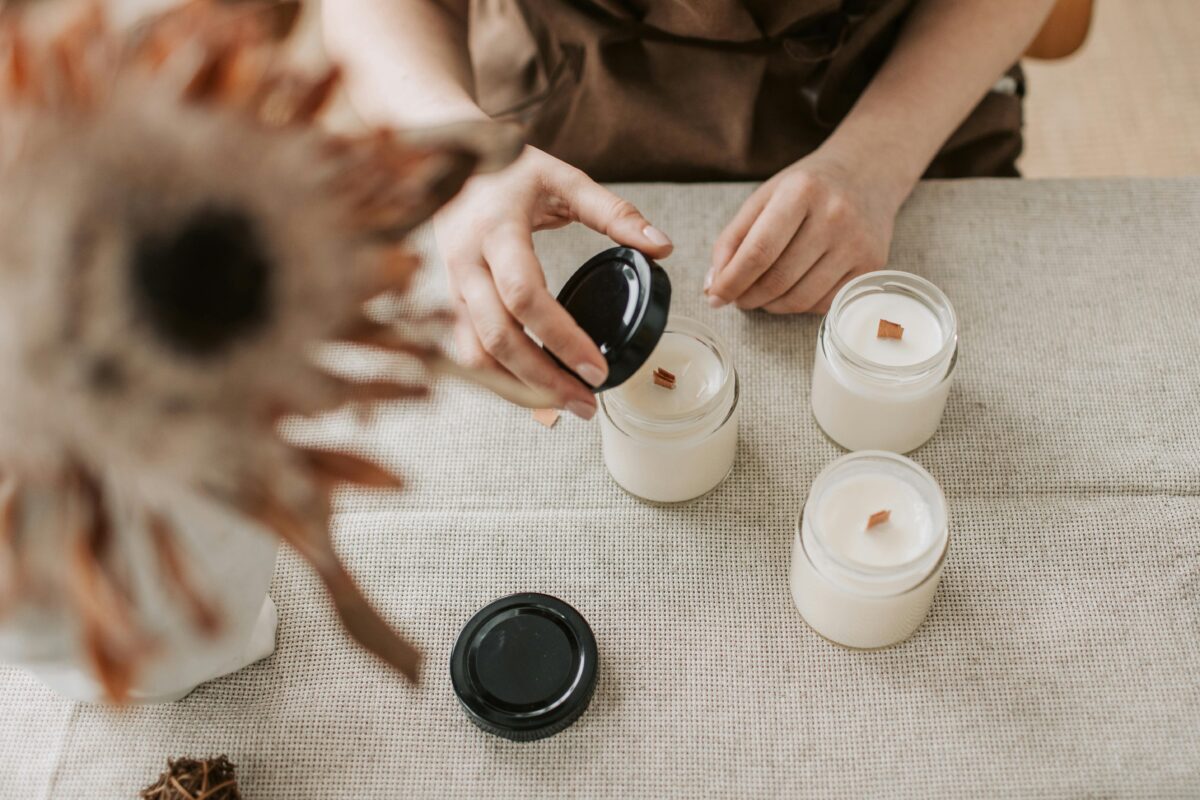
Feb
Candle making is a wonderfully creative craft, but the learning curve can be steep. Many eager beginners encounter the same frustrating issues—weak scent, ugly tunneling, and sooty jars—often due to a few common, avoidable errors. Understanding these pitfalls from the start can save you significant time, money, and materials, transforming your results from disappointing to professional.
This guide will walk you through the most frequent beginner candle making mistakes, explaining not just what goes wrong, but the precise science behind why. By addressing these core areas—safety, measurement, wicking, and patience—you’ll build a solid foundation for your craft. Let’s ensure your first candles are a source of pride, not a pile of troubleshooting woes.
Ignoring Safety Basics
One of the most dangerous candle making mistakes is treating the process casually. Never leave melting wax unattended on a heat source; it can reach flash point and ignite in moments. Always use a double boiler or a dedicated wax melter to provide gentle, indirect heat and prevent scorching or sudden boil-overs that can cause burns or fires.
Your workspace must be prepared. Keep a metal lid or baking sheet nearby to smother a potential wax fire (never use water), and have a fire extinguisher accessible. Ensure your surface is heat-proof, clear of clutter and flammable materials like paper towels. Prioritizing these safety fundamentals is non-negotiable and prevents the most severe consequences before you even perfect your first candle.
Not Measuring Precisely (Weighing vs. Volume)
A critical error that sabotages consistency is measuring wax and fragrance oil by volume (e.g., cups or milliliters) instead of weight. Wax flakes and oils have different densities, making a “cup” of wax an unreliable unit. This beginner measurement mistake leads to wildly inaccurate fragrance loads, causing candles that are either too faint or dangerously over-scented and prone to sooting.
Invest in a digital kitchen scale that measures in grams for absolute precision. Calculate your fragrance oil as a percentage of your wax weight (e.g., 10% of 500g wax = 50g oil). This method is the industry standard for a reason: it guarantees your scent throw and burn performance are repeatable with every single batch, eliminating a major source of guesswork and failure.
Wrong Wick Choice
Selecting a wick based on guesswork or container size alone is a top candle wicking mistake. The wick acts as the engine of your candle, and its size must be matched to the specific type of wax, fragrance load, and diameter of your container. An incorrect wick is the root cause of nearly all performance issues, from poor scent diffusion to unsafe burning.
A wick that’s too small will create a tiny melt pool that doesn’t reach the edges, leading to wasteful tunneling. A wick that’s too large will produce a tall, flickering flame, excessive soot, and can overheat the container. Always consult a wick guide from your wax or wick supplier and be prepared to test multiple sizes; there is no universal “best” wick for all candles.
Adding Fragrance at the Wrong Temperature
The timing of adding fragrance oil is a delicate science many beginners get wrong. Adding oil to wax that is too hot (above 185°F/85°C for many waxes) will cause the delicate aromatic compounds to burn off or evaporate, severely weakening the final scent throw. This is a common fragrance oil mistake that wastes expensive oils and results in disappointingly faint candles.
Conversely, adding fragrance to wax that is too cool (often below 170°F/77°C) prevents proper binding. The oil will not integrate fully with the wax molecules, leading to separation, oily pools on the surface, and poor hot throw. Use a thermometer to add your fragrance at the manufacturer’s recommended “add temperature” for your specific wax, typically a narrow window around 180°-185°F, and stir thoroughly for a full two minutes.
Skipping the Curing Process
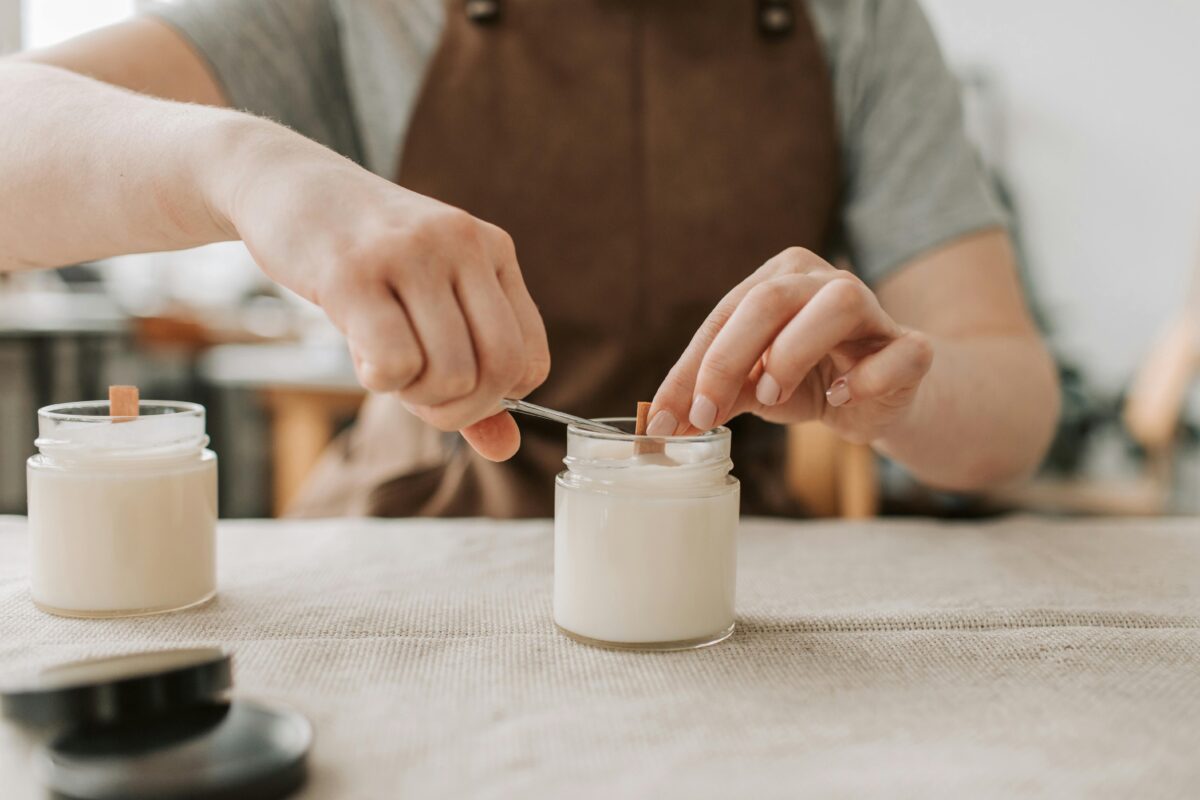
A classic beginner mistake is lighting a candle immediately after it hardens, expecting full fragrance strength. Pouring is not the finish line; curing is. Curing is the essential 1-2 week period where the fragrance oil fully integrates and bonds with the cooled wax crystals on a molecular level. Impatience here leads to a misleadingly weak hot throw, as the scent hasn’t matured and stabilized.
The required cure time varies by wax; soy wax notoriously needs a full two weeks to develop its scent, while paraffin may require less. Rushing this process means you’ll judge your candle’s performance incorrectly, potentially leading you to over-wick or over-pour fragrance in future batches. Patience during curing is a non-negotiable step for achieving the rich, true scent you designed.
Under or Over-Wicking
This common candle making error has two distinct, problematic faces. Under-wicking occurs when the wick is too small for the container diameter or fragrance load. The flame struggles, creating a small melt pool that tunnels down the center and leaves a thick wall of unused wax. This drastically reduces burn time and fails to release the candle’s fragrance effectively.
Over-wicking is the opposite and more dangerous mistake. A wick that is too large produces a tall, dancing flame, excessive heat, and black soot on the jar and walls. The wax pool may become dangerously deep and hot, posing a fire risk and causing the fragrance to burn off too quickly. Observing your first test burn is crucial to diagnose and correct this fundamental balance issue.
Poor Wax Adhesion (Wet Spots)
The cosmetic flaw of “wet spots,” where wax pulls away from the container wall, often alarms beginners. While sometimes unavoidable, it’s frequently caused by a preventable candle making mistake: thermal shock. Pouring hot wax into a room-temperature or cold glass jar creates a rapid, uneven cooling process, causing the wax to contract and detach.
To minimize this, gently pre-warm your containers before pouring. Use a heat gun on a low setting or place them in a warm oven (turned off) for a few minutes. This reduces the temperature differential, allowing the wax to cool more slowly and adhere better. While not always 100% avoidable, this simple step greatly improves your candle’s finished appearance.
Not Testing Thoroughly
The ultimate beginner candle making mistake is assuming your first recipe is perfect and skipping systematic testing. Every new combination of wax, fragrance oil, wick type, and container is a unique variable. Failing to conduct a full burn test—observing the melt pool, flame height, scent throw, and jar temperature—means you’re launching an untested, potentially poor-performing or unsafe product.
Testing is your quality control. Document each variable and burn the candle for at least 3-4 hours at a time, all the way to the bottom. This reveals issues like halfway tunneling, wick drowning, or fading scent that you’d never see otherwise. This disciplined practice is what separates hobbyists from professional chandlers and ensures consistent, high-quality results.
Conclusion: Refine Your Process
Mastering candle making is a journey of refining your process by learning from common errors. By actively avoiding these key beginner candle making mistakes—prioritizing safety, measuring by weight, selecting the correct wick, managing temperatures, and embracing curing and testing—you build a foundation for success. These are not failures, but essential lessons that every skilled chandler has learned.
Move forward with the understanding that precision, patience, and observation are your greatest tools. Use this guide as a checklist for your next batch. With each carefully made and tested candle, your confidence and skill will grow, turning potential frustrations into the rewarding craft you envisioned from the start.
